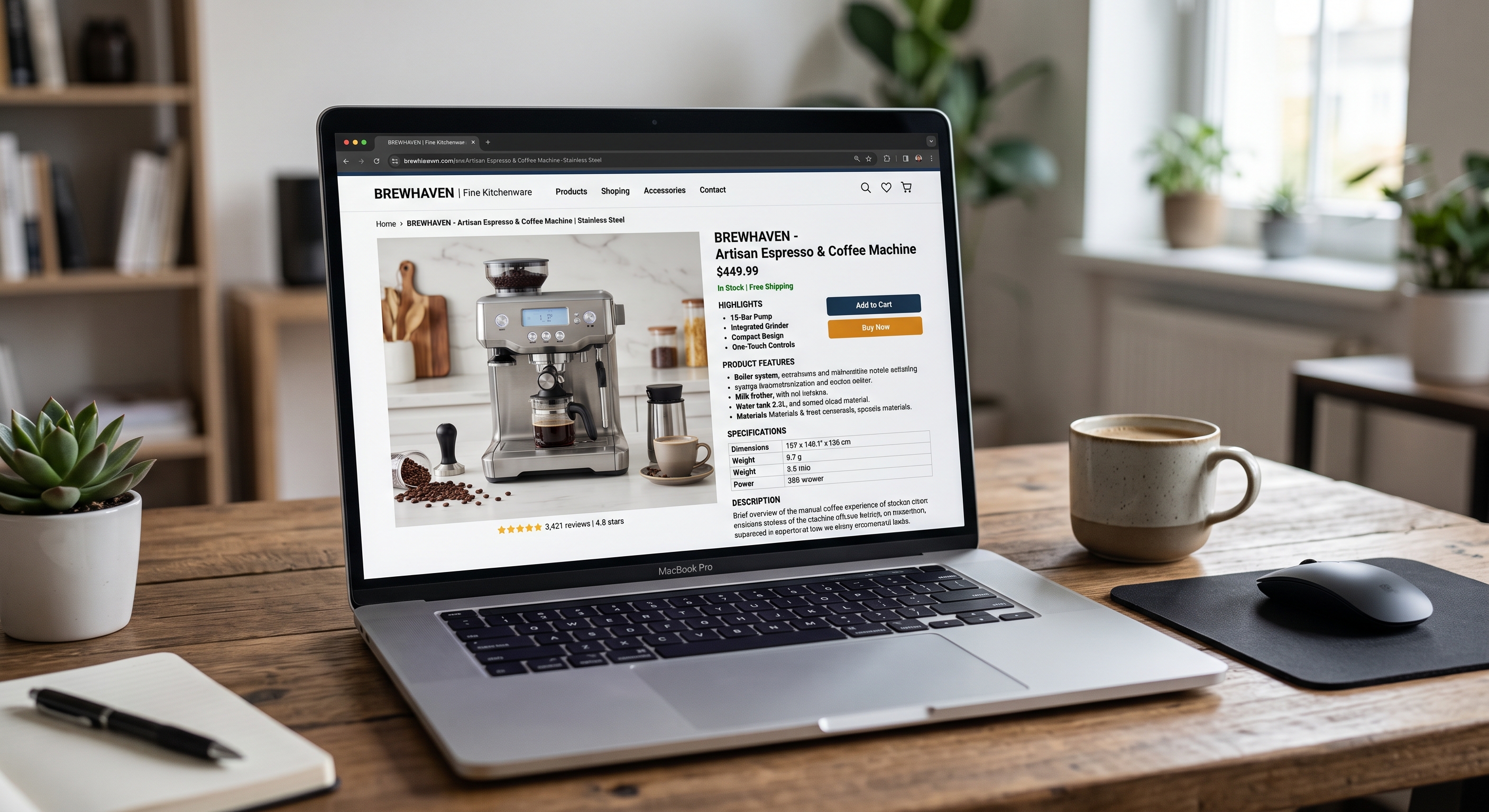
You can drive all the traffic in the world to a product, but if the description doesn't convince people to buy, they leave. A great photo earns the click; the description closes the sale. Yet most sellers treat it as an afterthought - a rushed paragraph of specs - and quietly lose conversions because of it. Writing descriptions that sell isn't about clever words. It's about a repeatable structure that answers buyer questions, sells the benefit, and reads easily on a phone. Here's how to do it.
Quick answer: To write a product description that sells, lead with the main benefit and who it's for, then support it with concrete details (materials, dimensions, how it's used). Write for skimming with short paragraphs and bullets, weave in the keywords buyers search, address common objections, and end with a clear reason to buy now. Sell the outcome, not just the features.
Why does the product description matter if you have photos?
Photos get attention; the description does the convincing. Photos show what a product looks like, but they can't explain materials, sizing, how it solves a problem, what's included, or why it's worth the price. The description carries all of that - and on marketplaces it's also indexed for search, helping buyers find you in the first place. Photos and copy are a team: strong photos with a weak description (or the reverse) still lose sales.
What makes a product description sell?
Selling the benefit, not just listing features. A feature is what the product is ("100% merino wool, 300g"); a benefit is what it does for the buyer ("stays warm without the itch, light enough to wear all day"). Buyers care about the outcome - how the product makes their life better, easier, or nicer. The descriptions that convert translate every important feature into the benefit behind it and paint a quick, concrete picture of the product in use.
How should you structure a product description?
A reliable structure that works on any platform:
- Opening hook - the main benefit and who it's for, in one or two lines.
- The benefits - what it does for the buyer, ideally shown in use.
- The specifics - materials, dimensions, what's included, and care.
- Objection handling - answer the doubts that stop a purchase.
- The close - a clear reason to buy now (gift-ready, made to order, limited run).
This order front-loads the persuasion and puts the reference details lower, where buyers scan for them once they're already interested.
How do you write a strong opening line?
The first line does the most work. On Etsy and in Google results, it's often the snippet buyers see before clicking "read more," so it has to earn attention. Lead with the biggest benefit or the exact thing the buyer is searching for — never "Welcome to my shop." Be specific and concrete rather than generic.
TIP: Front-load the first ~150 characters with your strongest selling point and main keyword. On Etsy and in Google search results, that opening is often all a shopper sees before deciding whether to keep reading.
How do you turn features into benefits?
A simple method: for each feature, ask "so what?" until you reach the buyer payoff.
- "Adjustable strap" → so what? → "fits a range of sizes" → so what? → "one size suits more people, with fewer returns."
- "Hand-poured soy wax" → "a cleaner, longer burn" → "hours of scent without the soot."
List the feature, then the benefit, so buyers get both the fact and the reason it matters to them.
How do you write descriptions that rank in search?
Your description helps buyers find you, not just convince them:
- Use the words buyers actually search - the same primary and long-tail keywords as your title and tags - naturally in the copy, especially early on.
- Don't keyword-stuff. Write for humans first; marketplaces and search engines increasingly reward readable, relevant copy and penalise spammy text.
- Cover long-tail terms your title can't fit - use cases, occasions, materials, and styles.
- On Amazon, the standard description is indexed for search (A+ Content is not), so it's valuable SEO space - use it for secondary keywords rather than repeating your bullet points.
How do you format a description for skimming?
Most shoppers scan rather than read every word, and most are on a phone:
- Short paragraphs of two to three sentences. Long blocks of text get skipped.
- Bullet points for specs, features, and what's included.
- Put the key details where they're easy to find, not buried in the middle of a paragraph.
- Break up the text so it's easy on a small screen.
Good formatting isn't decoration - it's what lets a skimming buyer find the one detail that closes the sale.
How do you handle objections and build trust?
Every hesitation you don't answer is a reason to leave. Anticipate and address the common ones:
- Sizing and fit - give clear dimensions and a scale reference.
- "Will it look like the photo?" - describe true colours and materials honestly.
- Shipping and processing time, and how it's packaged.
- Returns, guarantees, or made-to-order details.
Honest, specific answers reduce returns and bad reviews, and they make buyers feel safe clicking "buy."
Do product descriptions differ by platform?
The principles are the same everywhere, but the format and limits differ:
- Etsy - you get a generous 10,000-character description, but the opening lines matter most because they show in search and Google. Structure it with an opening hook, product details, use cases, care, and shipping - and use all 13 tags with long-tail keywords.
- Amazon - you get about 5 bullet points (your "key product features," written benefit-first) plus a roughly 2,000-character description that is indexed for search. Keep the two distinct - don't repeat your bullets in the description. Note that as of 2026 Amazon favours shorter titles (around 75 characters), so lead with the essentials.
- Your own store (Shopify and similar) - no real limits and full formatting control, so structure freely with headings, bullets, and images, and lean into your brand voice.
WARNING: On Amazon, avoid promotional or unverifiable claims in your listing copy - words like "best," "#1," "guaranteed," or "cure," and any references to price. Amazon's automated content scanner can suppress listings that use them.
A polished description works hardest right next to polished photos - together they're what turn a browser into a buyer.
Pair your descriptions with clean, studio-quality product photos from a single phone shot.
Try Easy Content Studio for free
What are the most common product description mistakes?
- Listing only features, never the benefit behind them.
- A weak opening ("Welcome to my shop") that wastes the most-read line.
- One long wall of text with no formatting.
- Keyword stuffing that reads badly and hurts ranking.
- Ignoring buyer objections like sizing, shipping, and returns.
- Copying manufacturer or competitor copy, which is bad for both SEO and trust.
- No reason to buy now - ending flat instead of with a nudge.
Frequently asked questions
How long should a product description be?
Long enough to answer every buyer question and no longer. Cover the benefit, key details, objections, and a reason to buy - often a few short paragraphs plus bullets. Etsy allows up to 10,000 characters and Amazon about 2,000; use the space you need, structured for skimming.
Should product descriptions focus on features or benefits?
Both, but lead with benefits. Buyers care about what the product does for them, not just its specs. Translate each important feature into the benefit behind it, then include the concrete details so buyers can decide with confidence.
How do you write a product description that ranks on Google and Etsy?
Use the keywords buyers actually search - the same terms as your title and tags - naturally in the copy, especially in the opening lines. Cover long-tail phrases like use cases and materials, and write readable copy for humans; stuffing keywords hurts both ranking and conversion.
What should the first line of a product description say?
Your strongest selling point and who the product is for - not a greeting. The opening ~150 characters often appear in Etsy and Google search results, so lead with the main benefit and primary keyword to earn the click and the "read more."
Do you need different descriptions for Etsy, Amazon, and Shopify?
The core copy can be shared, but adapt the format. Etsy rewards a keyword-rich opening and a longer description, Amazon needs benefit-first bullets plus a separate indexed description (and bans promotional words), and your own store gives you full formatting freedom. Tailor to each platform's limits and rules.
How do you write descriptions that increase sales?
Lead with the benefit, structure for skimming, weave in search keywords, answer objections honestly, and give a clear reason to buy. Selling the outcome - not just listing specs - is what turns browsers into buyers.
Can you reuse the manufacturer's product description?
It's best not to. Duplicated copy performs poorly for SEO and rarely speaks to your specific buyer. Original descriptions that highlight your benefits, your voice, and your keywords rank better and convert better.